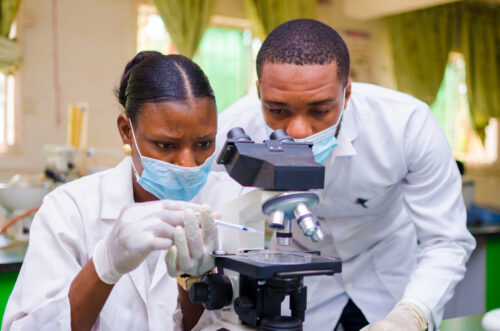
The 2026 African Health Security (AHS) Index shows encouraging progress across the continent, but it also highlights critical gaps that still need attention. The continent’s average health security score increased from 32.4 in 2021 to 41.5 in 2026 (a 9.1 point increase), with 52 of 54 countries improving their performance by at least 1 point.
African countries are building stronger systems to advance health security and sovereignty. However, the scale and speed of rising health threats call for urgent action and increased investment. More frequent outbreaks, climate change effects, unstable funding, and political and security risks continue to increase vulnerability.
Health security capacities are growing.
- Prevention, detection, and rapid response capabilities all improved across much of the continent.
- Biosurveillance systems have expanded, with 52 countries now conducting wastewater or environmental surveillance and 48 countries having genomic sequencing capacity.
- Access to water and sanitation infrastructure has increased, helping reduce disease risks and strengthen public health resilience.
- Emergency response infrastructure continues to grow, with 52 countries operating emergency operations centers and many more meeting epidemiologist staffing targets.
But the progress is not yet enough.
- Financing commitments for pandemic preparedness have declined.
- Biosecurity and biosafety capacities are still low.
- Many countries are better equipped to develop medical countermeasures, such as vaccines and treatments, but fewer can distribute them effectively during an emergency.
More work can be done, and recent gains could be at risk without sustained attention, action, and investment. Governments, multinational organizations, regional entities, funders, and the private sector must act to:
- Require all future investments in infectious disease research and pandemic prevention, preparedness, and response (PPR) to include biosecurity and biosafety resources and training.
- Develop and adopt national-level biosecurity and biosafety legislative and regulatory frameworks, leveraging regional guidance.
- Expand investment in emerging surveillance approaches and early warning and detection capacity, along with commensurate investment in decision-making tools to translate data into action.
- Formalize inter-country cooperation agreements that support the response to infectious disease outbreaks that cross borders.
- Build robust MCM deployment capacities—like workforce surge planning and last-mile distribution, modeled on initiatives like the 100 Days Mission—to complement strong improvements on MCM development.
- Develop a harmonized emergency use authorization framework as part of further building out the Africa Medicines Agency.
- Strengthen water and sanitation infrastructure.
- Adopt a One Health approach to disease surveillance by establishing and maintaining infectious disease surveillance systems within wildlife, poultry, and livestock populations.
- Make public and demonstrable commitments to financing pandemic PPR.
- Establish a systematic, publicly accessible, global pandemic spending tracker and endorse minimum pandemic PPR financing benchmarks.
The takeaway is clear: Africa’s health security capacity is improving, but continued action and investment are needed to build a safer future and protect communities from emerging health threats.
Learn more, explore the data, and review the 2026 AHS Index findings and recommendations here.